Provider Harbor
Gallery
Identified
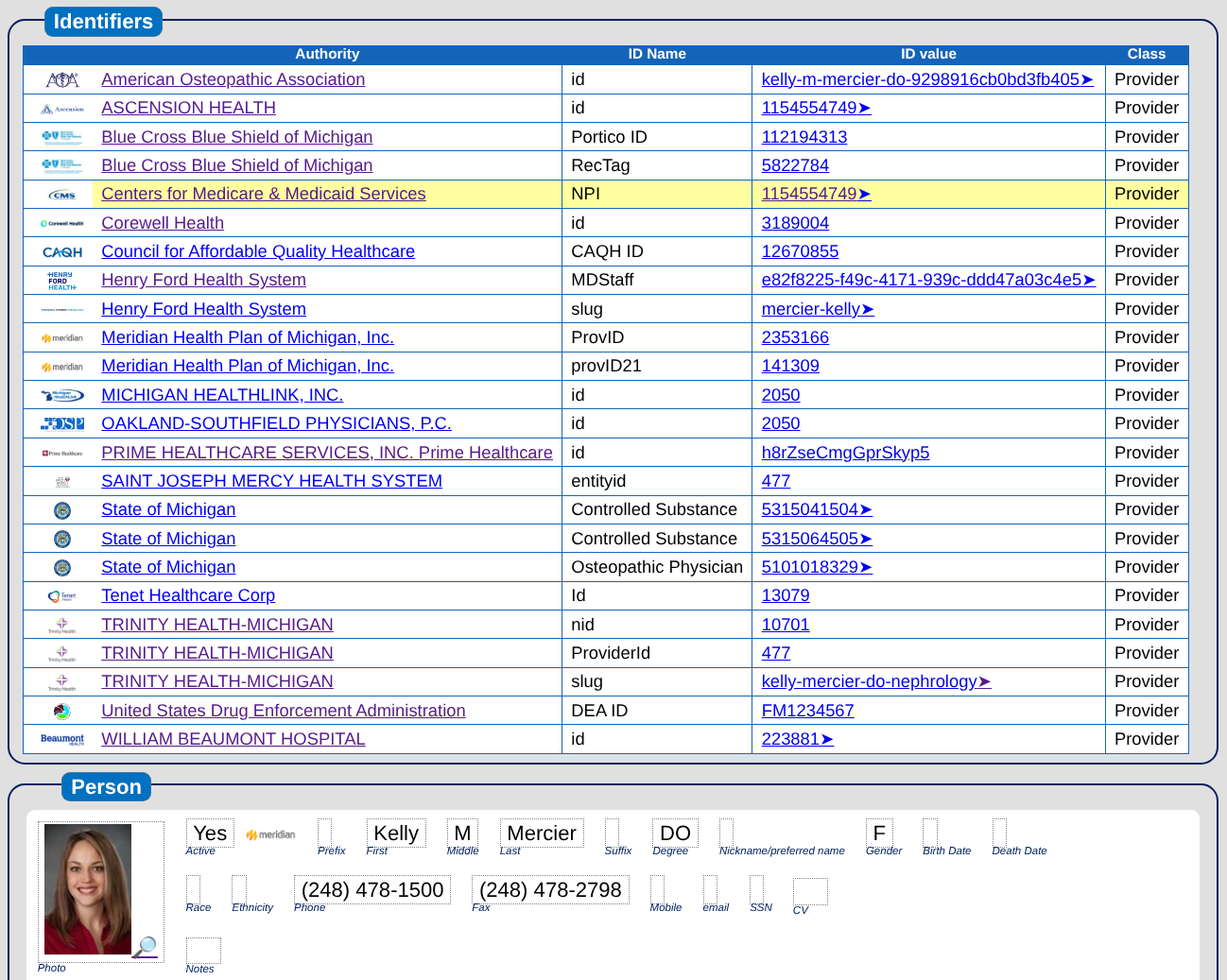 Example of tracking every known provider identifier as aliases for a single provider. This
architecture supports an automatic "crosswalk" between any two identifiers as a use-case might require.
User can also search for a provider using any of the listed identifiers, phone number or, of course, name.
The "➤" after some ID values are deep links to the provider's record at the corresponding source's web site.
Example of tracking every known provider identifier as aliases for a single provider. This
architecture supports an automatic "crosswalk" between any two identifiers as a use-case might require.
User can also search for a provider using any of the listed identifiers, phone number or, of course, name.
The "➤" after some ID values are deep links to the provider's record at the corresponding source's web site.
Authoritative
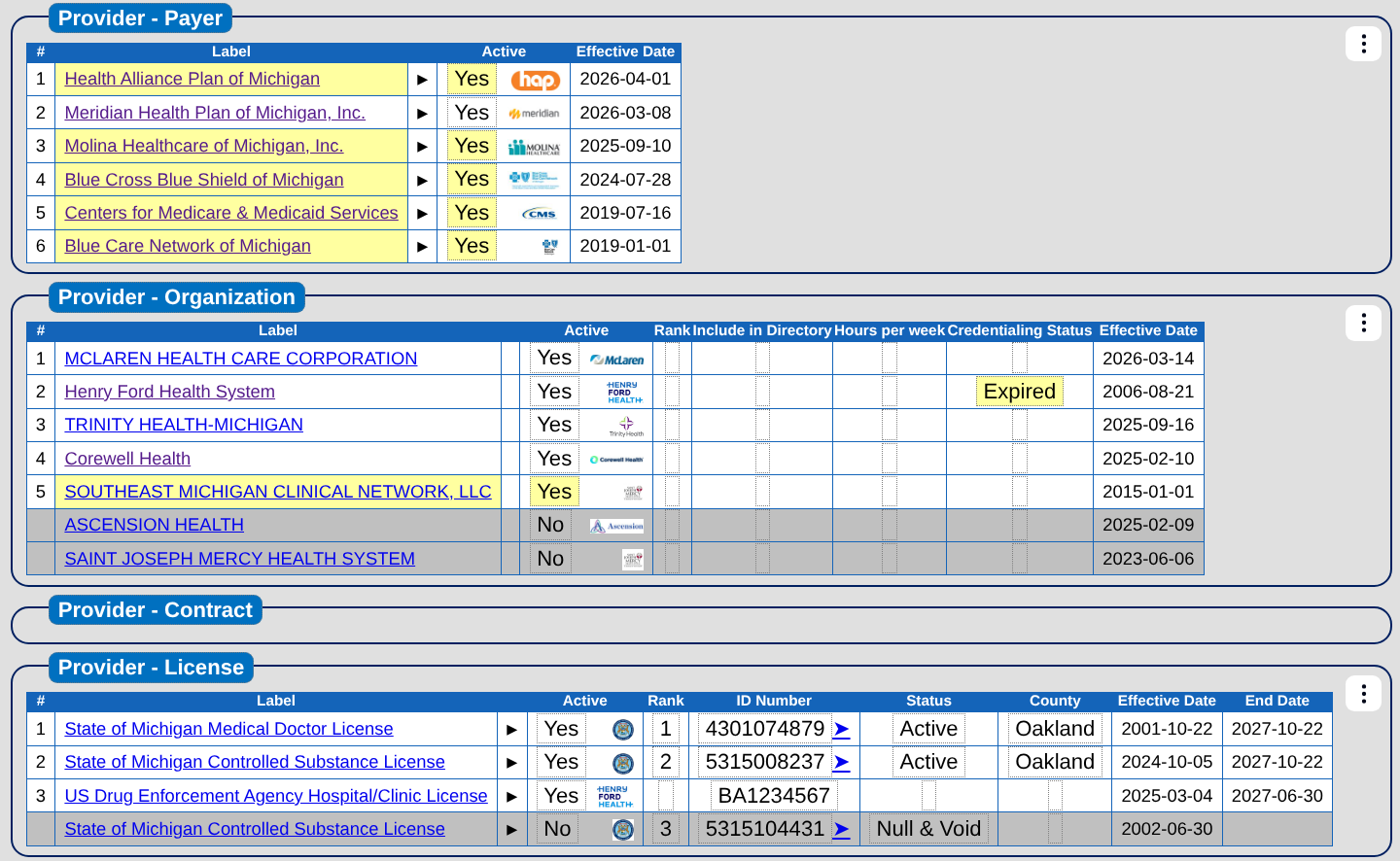 The collaborative data-warehouse architecture allows information to be populated directly
from their authoritative sources (the data source is identified by the logo in the "Active" column).
In this example, whether the provider is recognized as
a payable member in a commercial payer's network is determined by the payer themselves.
State licensing status is supplied by the state licensing board.
The collaborative data-warehouse architecture allows information to be populated directly
from their authoritative sources (the data source is identified by the logo in the "Active" column).
In this example, whether the provider is recognized as
a payable member in a commercial payer's network is determined by the payer themselves.
State licensing status is supplied by the state licensing board.
Atomic
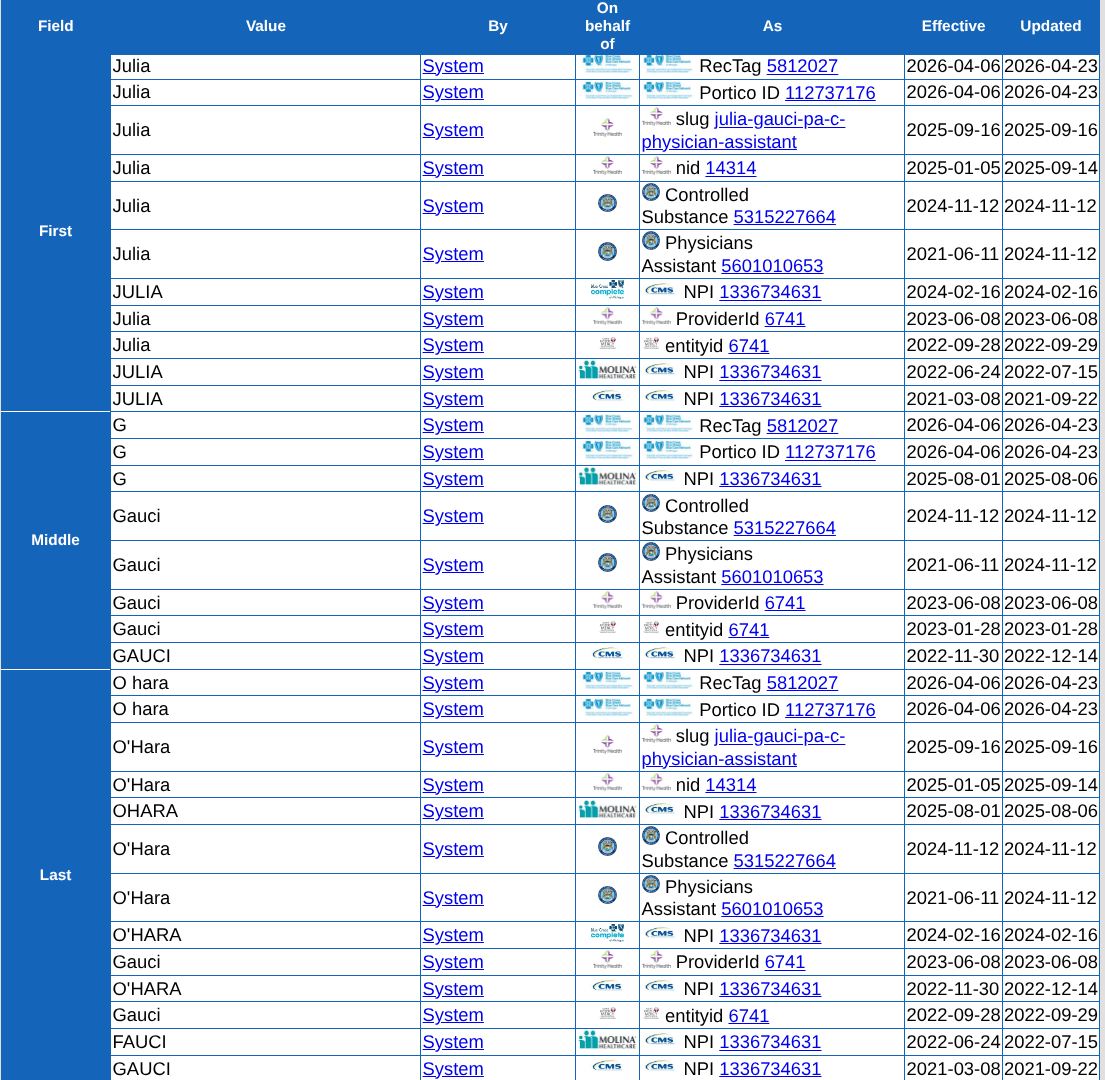 Each data point is tracked individually, with its own effective date, domain, editor name, and source.
In this example, the provider last name changes to a [presumably] married name
around 2022, and presents the dates various sources became aware of the new name,
all while the first and middle names remained unchanged.
Each data point is tracked individually, with its own effective date, domain, editor name, and source.
In this example, the provider last name changes to a [presumably] married name
around 2022, and presents the dates various sources became aware of the new name,
all while the first and middle names remained unchanged.
Integrated
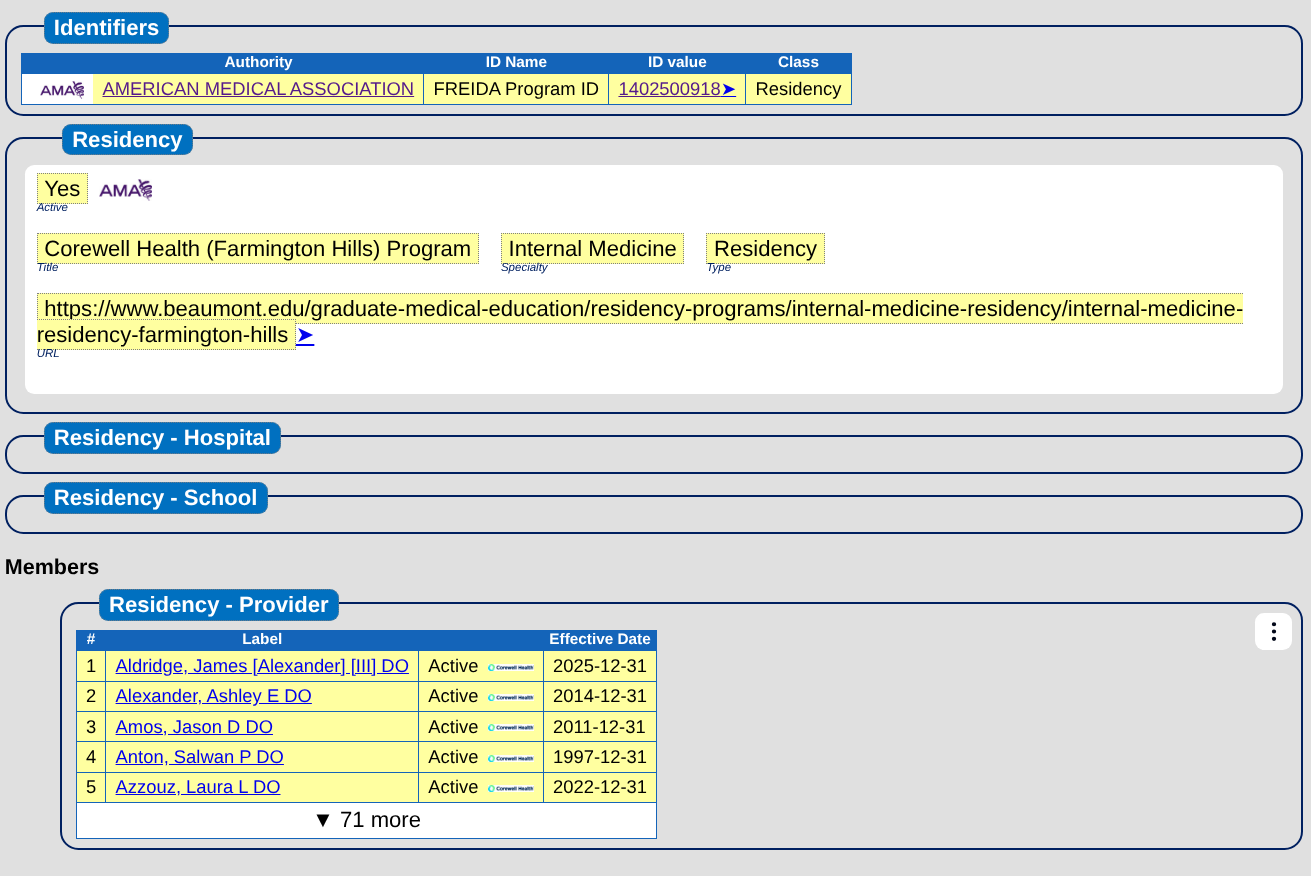 Because of the closed-set architecture, every recorded provider attribute automatically
makes the reverse relationship also immediately accessible. In this page, representing
a specific residency program and it's properties, the list of all providers participating in that program are
automatically included in the "Members" section at the bottom.
Also, in all the examples, the text in blue or purple underline are hyperlinks to the pages that
contain all known information on that specific entity, resulting in a sort of "Wikipedia" of
provider information.
Because of the closed-set architecture, every recorded provider attribute automatically
makes the reverse relationship also immediately accessible. In this page, representing
a specific residency program and it's properties, the list of all providers participating in that program are
automatically included in the "Members" section at the bottom.
Also, in all the examples, the text in blue or purple underline are hyperlinks to the pages that
contain all known information on that specific entity, resulting in a sort of "Wikipedia" of
provider information.
Reconciled
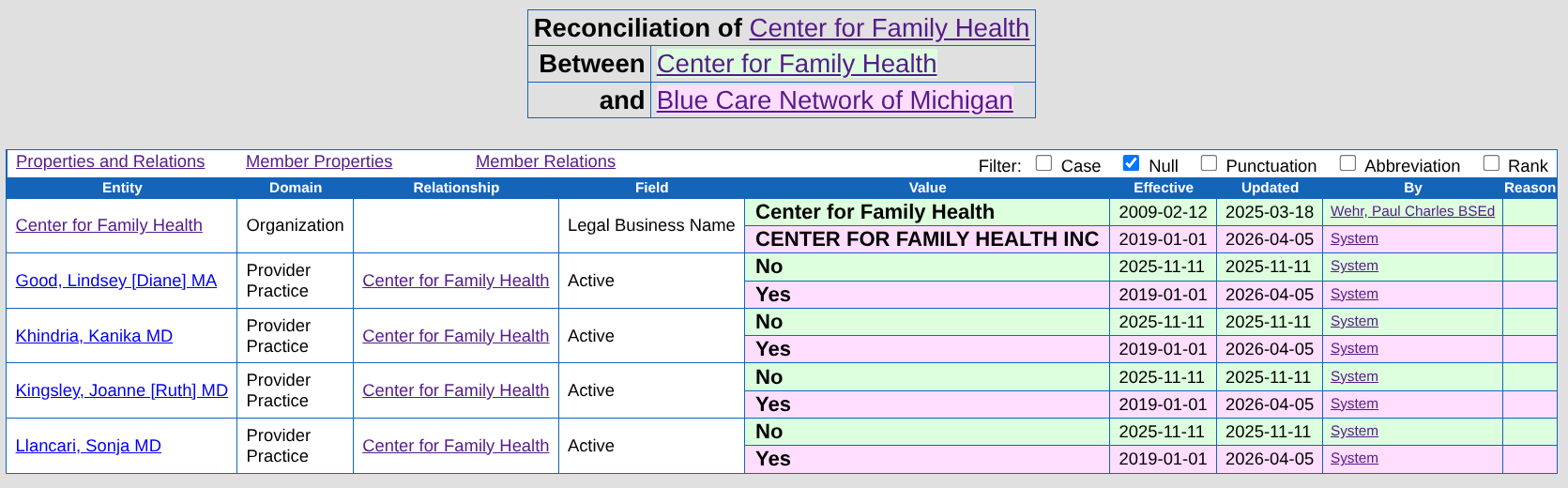 Reconciliation of provider networks between two organizations (e.g. between a physician organization
and a commercial payer) has historically been a labor-intensive and imprecise flurry of emails
and spreadsheets. When all incoming information is standardized and co-located, the discrepancies
are available to be presented to both organizations with a single click.
Reconciliation of provider networks between two organizations (e.g. between a physician organization
and a commercial payer) has historically been a labor-intensive and imprecise flurry of emails
and spreadsheets. When all incoming information is standardized and co-located, the discrepancies
are available to be presented to both organizations with a single click.
Temporal
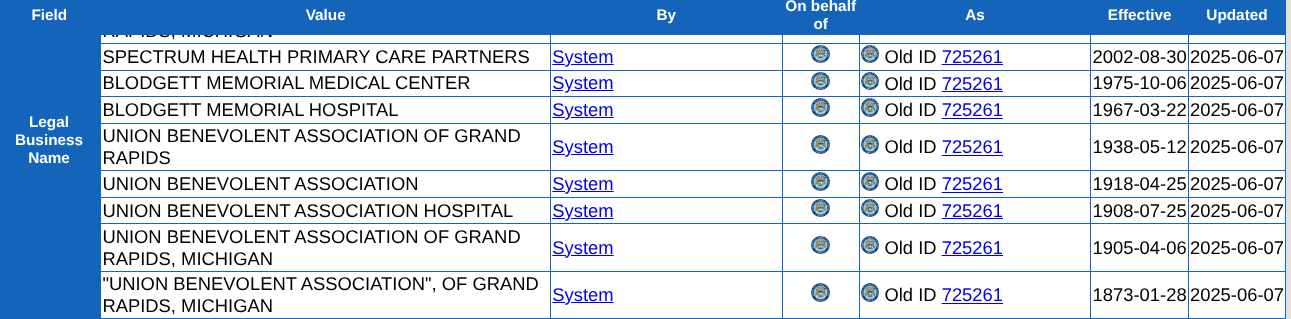 Thanks to using the State of Michigan as an authoritative data source, Provider Harbor knows,
for example, that "Spectrum Health Primary Care Partners"
started as "Union Benevolent Association of Grand Rapids, Michigan" in 1873, as well as the details
of every intervening name change, and the dates they occurred.
Thanks to using the State of Michigan as an authoritative data source, Provider Harbor knows,
for example, that "Spectrum Health Primary Care Partners"
started as "Union Benevolent Association of Grand Rapids, Michigan" in 1873, as well as the details
of every intervening name change, and the dates they occurred.
Complete
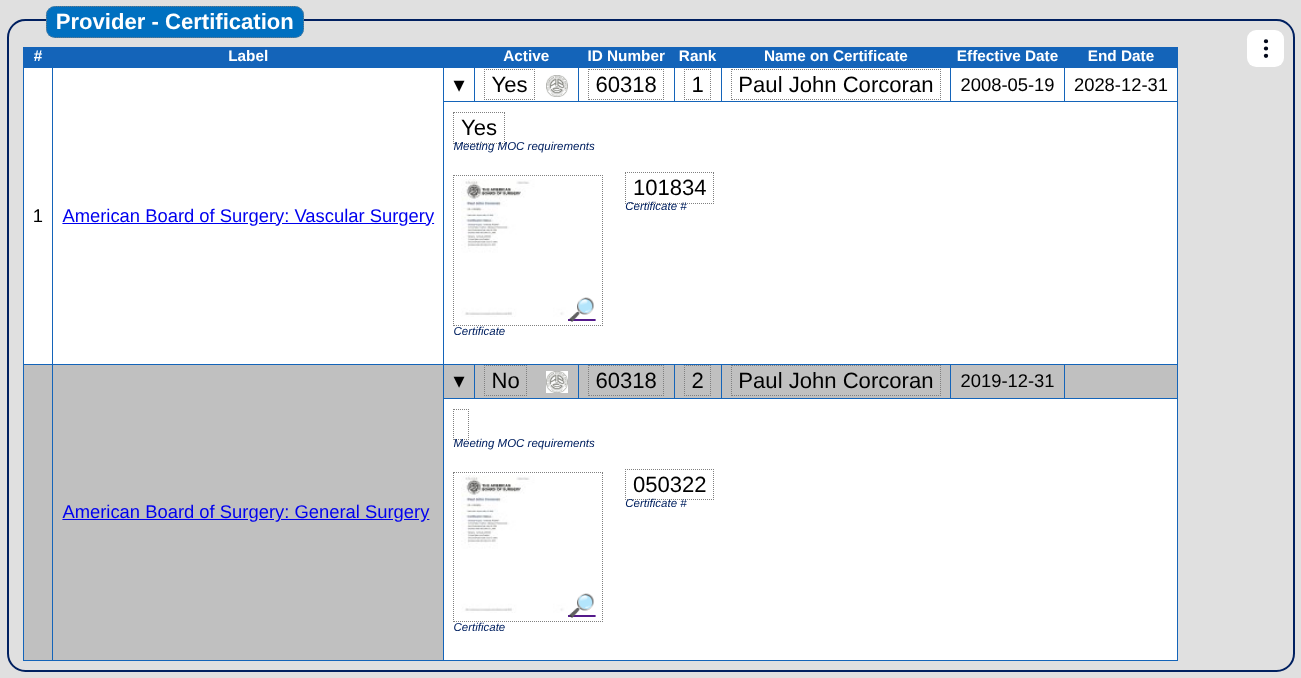 The evidence to support provider information is as important as the information itself, so in addition
to the traditional text fields, Provider Harbor supports the attachment of the source documents
themselves, to eliminate any confusion or ambiguity. Most provider directory implementations
struggle to maintain a free-text board certification. In this
example Provider Harbor supports tracking not just the free-text certification name,
but also the provider's ID number with the certifying board,
the certificate number, and the original certificate itself,
all sourced automatically and directly from the board's authoritative site.
The evidence to support provider information is as important as the information itself, so in addition
to the traditional text fields, Provider Harbor supports the attachment of the source documents
themselves, to eliminate any confusion or ambiguity. Most provider directory implementations
struggle to maintain a free-text board certification. In this
example Provider Harbor supports tracking not just the free-text certification name,
but also the provider's ID number with the certifying board,
the certificate number, and the original certificate itself,
all sourced automatically and directly from the board's authoritative site.
Mapped
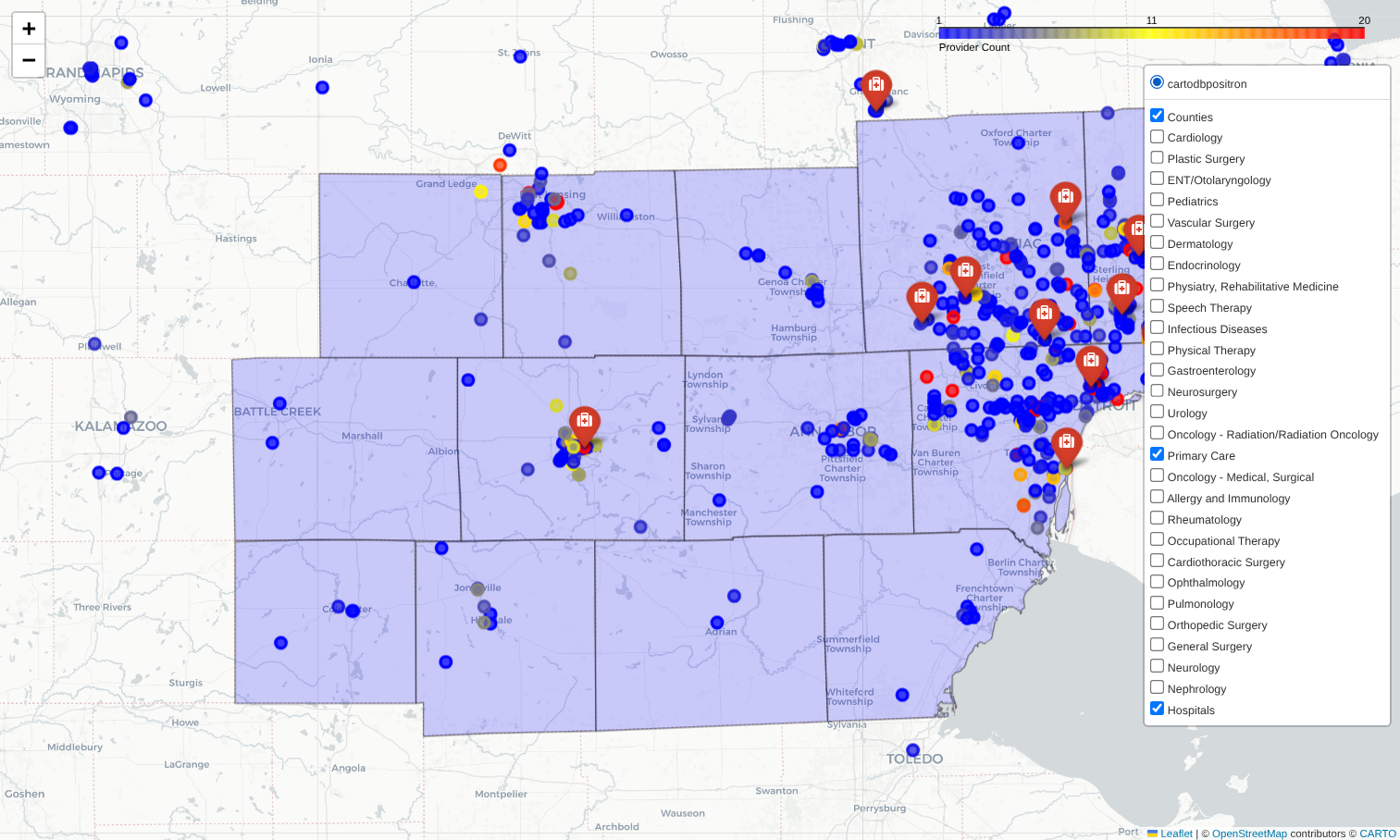 Explicit semantic coding of all provider properties supports strategic-level analytics.
The providers' NUCC-coded specialties, along with their geo-coded practice locations allows
a map of network coverage of specific specialties to be presented with a single click.
Explicit semantic coding of all provider properties supports strategic-level analytics.
The providers' NUCC-coded specialties, along with their geo-coded practice locations allows
a map of network coverage of specific specialties to be presented with a single click.